Table Of Content

She declined to give specific numbers while researchers were actively working on a data analysis of the phenomenon. This is about one author's personal, anecdotal experience and should not substitute medical advice. If you're having health concerns of any kind, we urge you to speak to a healthcare professional. Histologic findings in telogen effluvium are best seen in transverse sections of a punch biopsy.
What are the clinical features of acute telogen effluvium?
Childbirth can also cause excessive hair to enter the telogen phase. This hair loss, telogen gravidarum, occurs approximately three months after childbirth [12]. Telogen effluvium is a scalp disorder characterized by diffuse, non-scarring shedding of hair [1]. The term “telogen effluvium” was proposed to differentiate it from excessive shedding of normal club hair. Various hypotheses are put forward regarding the pathophysiology of telogen effluvium. Headington proposed that there are five different functional types of telogen effluvium based on alternations in particular phases of the follicular cycle [2].
Diagnosis and Tests
It’s difficult to pinpoint a hero product since I attacked this from all angles, but I’d definitely say the Minoxidil made the biggest impact. Without it, I don’t know if my hair would have reentered the growth phase at all. While my result of 29 fell within the "normal" range of 12 to 207, my dermatologist said he wanted to see the number up around 70. Low iron can result in hair shedding as well as fatigue, lightheadedness, and heart palpitations, all of which I’d experienced and wrote off as anxiety.
Female pattern hair loss

Telogen effluvium is a type of hair loss that involves rapid shedding of hair over a short period. It typically happens a few months after your body goes through something physically or emotionally stressful. Hair loss due to telogen effluvium is usually temporary, and your hair often grows back without treatment once you no longer have that stress. Traction alopecia is the result of environmental factors, such as wearing your hair in tight hairstyles, Agbai says. Telogen effluvium refers to the excessive shedding of hair follicles, and it occurs when hair follicles prematurely skip to the end of the hair growth cycle, she adds.
When hair follicles are in a resting state, they don’t grow as they normally would. Usually, the hair grows back within several months of resolving the trigger. In the case of chronic telogen effluvium, the regrowth may take longer, and the shedding may come and go. The types of stress that cause telogen effluvium may be physical or psychological. Relaxation techniques like meditation, yoga, and appropriate exercise may help you recover from physical trauma and reduce stress levels, which could lead to restored hair growth more quickly. It's often due to an event such as major surgery, chronic illness, or a high fever.
Medical tools and resources
Topical minoxidil and dietary supplement for the treatment of chemotherapy-induced alopecia in childhood: a ... - Nature.com
Topical minoxidil and dietary supplement for the treatment of chemotherapy-induced alopecia in childhood: a ....
Posted: Thu, 22 Feb 2024 08:00:00 GMT [source]
Your healthcare provider will also ask you about your diet and recent medical history. They may identify a dietary cause or a stress or illness that occurred about three months before you noticed hair loss. In many cases, someone with telogen effluvium has fully recovered from a stressor or illness and doesn’t see a connection between it and their hair loss. Hussain et al. [24] performed a systematic review involving 465 patients diagnosed with acute TE. The most common trichoscopy findings were a decrease in hair density and empty follicles.
Healthcare professionals
A hair follicle usually grows anagen hair for 4 years or so, then rests for about 4 months. With telogen effluvium, the anagen phase slows down, meaning fewer hairs enter the next two stages. With this condition, around 30% of hair follicles move into the telogen phase, meaning hair shedding occurs. Eating a healthy balanced diet is the best way to give your body all the nutrients it needs.
In most cases, your healthcare provider can diagnose telogen effluvium without any testing. They may recommend further testing, including blood tests or a scalp biopsy, if they suspect a condition or illness has caused telogen effluvium. A healthcare provider can confirm it during a physical examination of your scalp. They may conduct a “pull test,” in which they gently pull a small clump of 40 to 60 hairs between their fingers.
What is baldness?
One evening when I was around eight, she sat by my bed as I fell asleep. As she slowly stroked my hair, I dozed in and out of consciousness. But when I turned back over, I noticed my grandmother without her hair — that was when discovered she wore a wig.
Managing stress related hair loss - WSAW
Managing stress related hair loss.
Posted: Mon, 15 Apr 2024 07:00:00 GMT [source]
Telogen effluvium is a non-scarring form of diffuse hair loss with no clinical or histological evidence of inflammation and can affect up to 50% of the scalp hair. This article looks at the causes, symptoms, diagnosis, and treatment of telogen effluvium, including dietary changes that may help. TE course may be acute or chronic when its duration exceeds 6 months.
Once the stressful event has passed, your hair thickness will usually return to normal within a few months. Rarely, you may have telogen effluvium caused by zinc deficiency or iron deficiency and taking appropriate supplements cures the problem. The hair loss usually becomes noticeable several months after the triggering event.
The buzz of adventure was like nothing I'd ever experienced before — as I counted my pennies and soaked up colorful views of European summer, I felt complete euphoria. All that changed when, unexpectedly, my hair began to shed excessively, and I found myself in a limbo of confusion. While hair loss can be just as stressful for men, it's more socially acceptable and depending on the gene pool, somewhat expected. I discovered women make up a shocking 40 percent of hair loss sufferers, but it’s seldom discussed.
I cooked balanced meals packed with macro and micronutrients and took vitamin supplements, but the one thing I couldn't do was relax. I was tempted to cut my hair to disguise the shedding, but the sheer thought of a haircut made me feel like I was letting hair loss win. Instead, I hid behind a slicked back up-do to fuel my denial (even though this style can actually make another form of hair loss — traction alopecia — worse). When I saw my reflection in car windows, shop mirrors, and my iPhone camera, that style helped me trick myself into forgetting. "Diagnosing telogen effluvium is the easy bit. The challenge is finding the cause, and more often than not, several coexistent factors may be contributing to it."
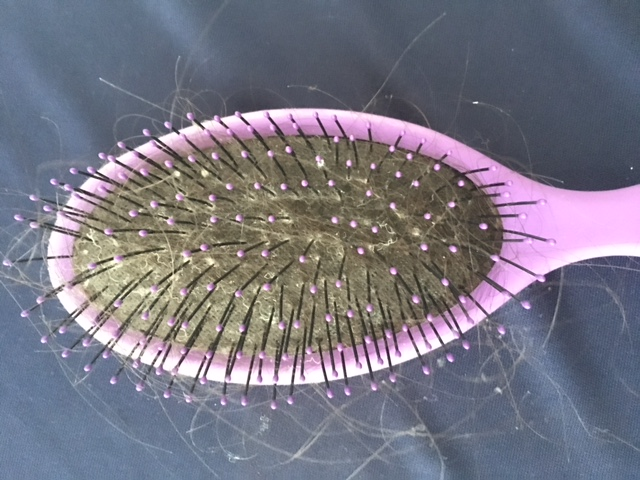
The popular saying 'bad hair day' tells us that the state of the hair can also influence the way we feel and our mood. According to the American Academy of Dermatology Association (AADA), shedding between 50 and 100 hairs a day is a natural occurrence. Noticing a curl or two on the collar of my coat or brushing three or four off of my pillowcase felt common. But as more and more clumps of my hair began to settle in the shower drain, the overactive shedding became alarming.


No comments:
Post a Comment